25.04.2026
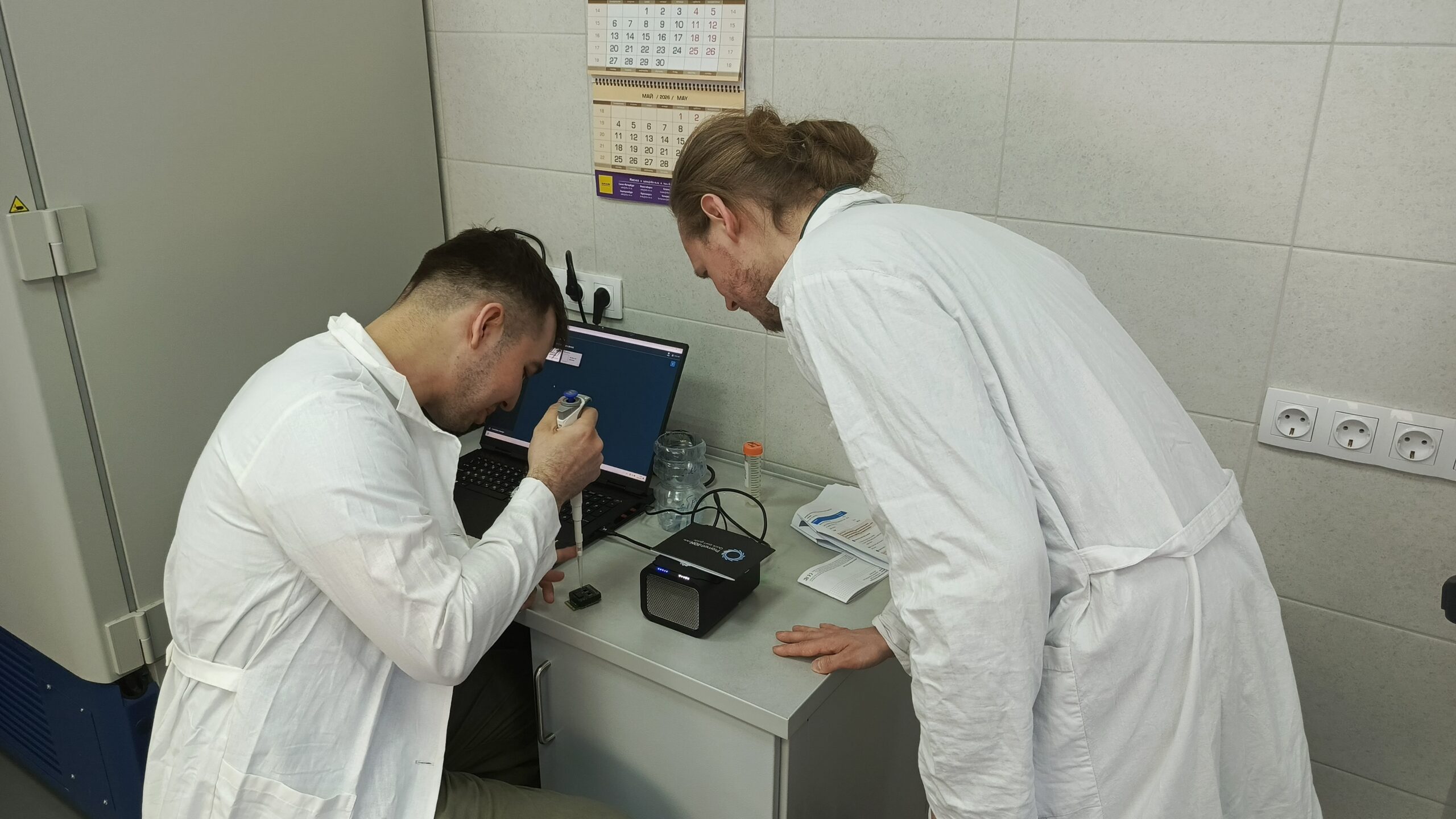
Staff from the Laboratory of livestock genomic and post-genomic technologies at the Institute of Biochemistry and Genetics UFRC RAS completed an in-depth training course on nanopore sequencing technology. The training was part of the Megagrant project "Development of Effective Tools for Livestock Development Using Genetic Technologies and Big Data Analysis." The introduction of nanopore sequencing into livestock breeding promises to improve the accuracy of genetic prediction and ensure the biosecurity of farms, which aligns with the objectives of the national project on technological support for food security.
Traditional animal evaluation methods take years. Nanopore sequencing enables real-time genome analysis. Training staff to use portable sequencers offers a number of strategic advantages:
- selection accuracy: long DNA reads allow us to identify complex structural changes in genes responsible for productivity, feed conversion, and disease resistance that conventional DNA chips cannot detect;
- instant veterinary control: specialists can now identify infectious agents and determine their origin on-site in a matter of hours, without waiting for a response from external laboratories;
- cost reduction: local use of nanopore technologies eliminates logistics costs and allows for the “genomic audit” of animals to be carried out in-house;
- epigenetic monitoring: trained staff will be able to analyze the influence of environmental conditions on gene expression (DNA methylation), optimizing diets and living conditions to maximize genetic potential.
"Nanopore sequencing is 'reading the text as a whole,' not just individual letters. Training our specialists in this technology allows us not only to follow trends, but also to independently develop highly productive and sustainable livestock lines with pinpoint accuracy," notes Oleg Gusev, head of the Laboratory of livestock genomic and post-genomic technologies at the Institute of Biochemistry and Genetics UFRC RAS.
The project's industrial partner is Tavros Group, a leading livestock farming company implementing innovative biotechnological solutions to ensure food security and improve the efficiency of the agro-industrial complex.